
Technical Insight
Why Core Drilling and Drill-Core Logging Matter in Mineral Exploration
Core drilling gives geologists direct subsurface material to examine. The value of that core depends on disciplined recovery, logging and documentation.
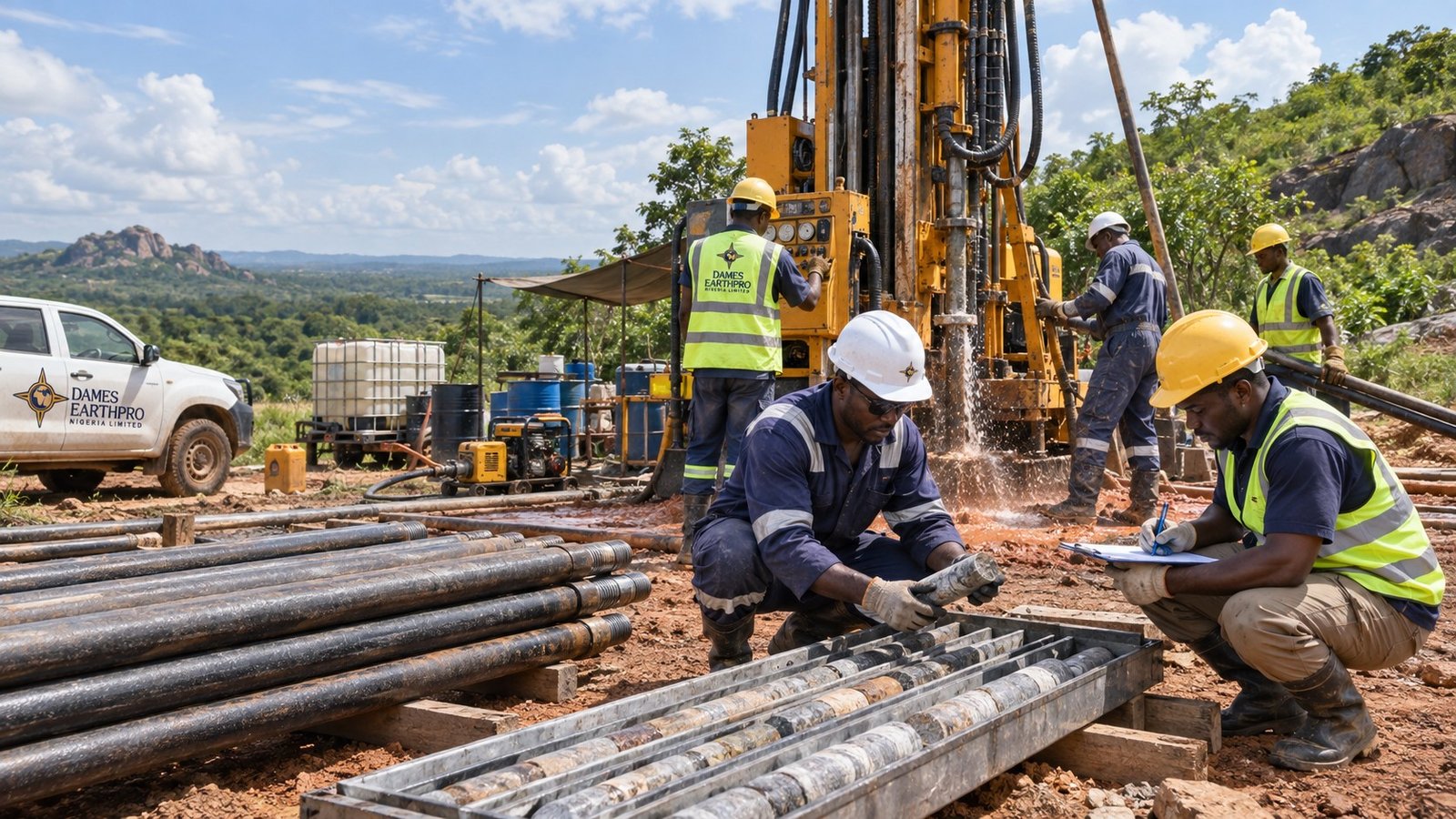
Surface mapping and geophysical surveys can identify exploration targets, but many geological questions can only be tested properly by examining material recovered from below the ground. Core drilling is therefore an important stage in many mineral exploration programmes.
What Core Drilling Provides
A core drilling programme is designed to recover cylindrical sections of subsurface rock along a planned drill path. The recovered material gives the geological team direct evidence of rock type, structure, alteration, mineralisation and contacts at depth. This can help test interpretations developed from surface work and geophysical data.
Drilling should be planned around a clear geological objective. Drill location, orientation and depth are not simply construction decisions; they affect what geological question the hole is able to test.
Core Recovery Is Only the Beginning
Recovered core has to be handled and organised carefully. Depth intervals, recovery, core orientation where applicable, box references and other field records should be maintained so observations can be traced back to the correct position in the borehole.
Poorly organised core can reduce the value of an otherwise successful drilling programme. A disciplined workflow from the rig to the core tray and field record is therefore part of the technical process.
Drill-Core and Geological Logging
Logging is the systematic description of the recovered geological material. Depending on the project, observations may include lithology, grain size, structures, alteration, mineralisation, fractures and other relevant features. Geological logging creates a continuous technical record that can be compared between holes and integrated with other exploration data.
Photographic records and clear field documentation also support later interpretation. Where samples are selected for analysis, the relationship between the sample interval and the logged geology should remain clear.
How Drilling Supports Better Decisions
Core drilling can help confirm or reject a geological target, refine structural interpretation, support three-dimensional modelling and guide further exploration. The most useful drilling programmes connect each hole to a specific decision: whether to advance, refine, extend or stop investigation in a particular area.
Dames Earthpro Nigeria Limited provides core drilling, drill-core recovery, drill-core logging, geological logging, field records and technical documentation for exploration projects in Nigeria.
Before Mobilisation
Clients should provide the project location, available geological information, target objective, site-access information and any existing survey or exploration data. A technical review before mobilisation helps align field execution with the intended geological outcome.